
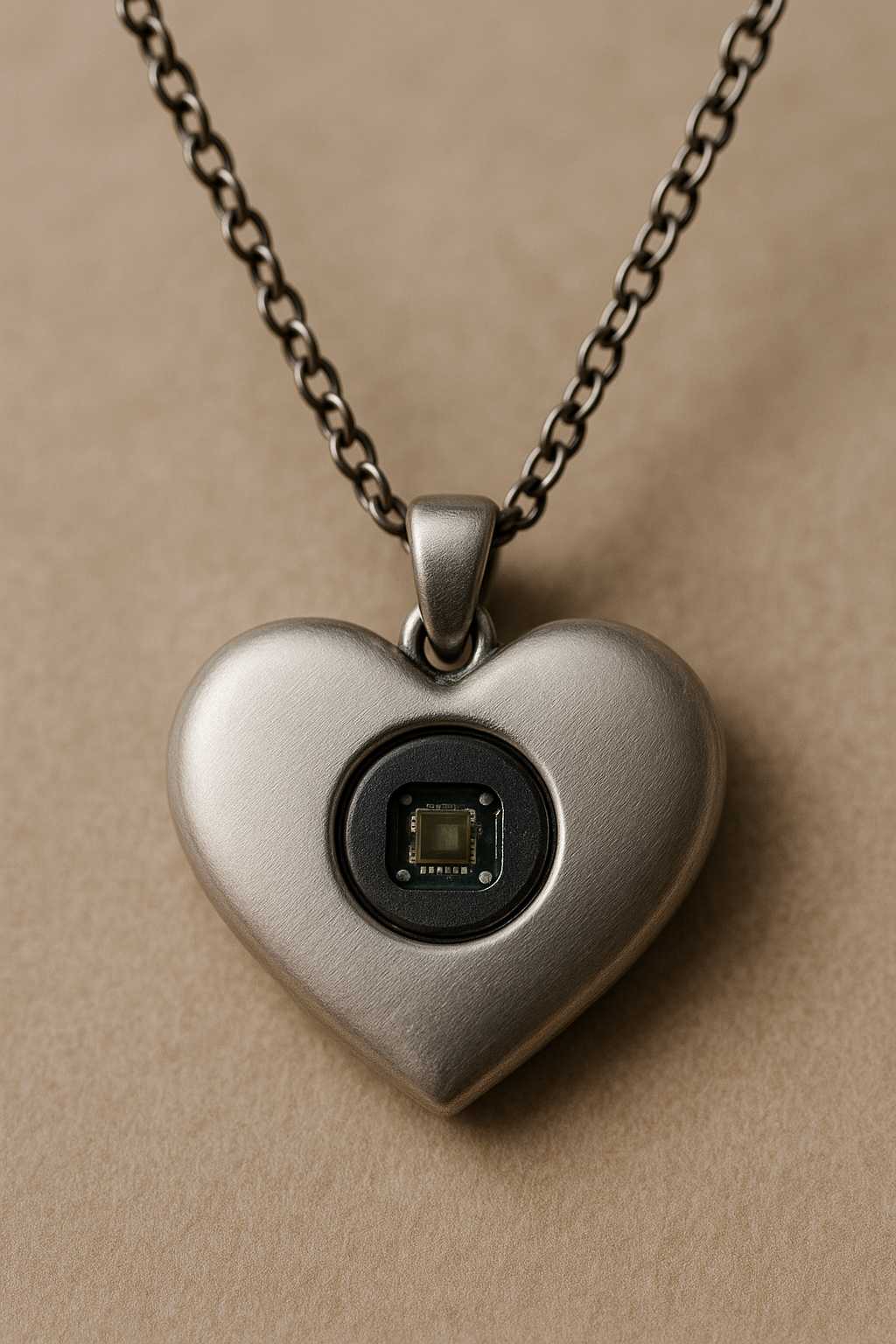
A pendant has always been a symbol of love, culture, style, or even personal identity. But in the age of open-source electronics, it can also be a hub of data collection and interaction. Imagine a necklace that quietly monitors your heart rate, tracks air quality, or guides you with subtle haptic feedback, all while looking like a beautifully crafted piece of jewelry.
Why Pendants are Perfect for Sensor Integration
When adding technology to fashion, space and comfort are key considerations. A pendant naturally provides a small, centralized housing area for electronics while remaining stylish.
Advantages of pendants for sensor-based wearables:
- Space efficiency – A pendant can house microcontrollers, batteries, and sensors without appearing bulky.
- Accessibility – Being close to the chest or neckline is ideal for measuring biometric signals.
- Customizability – Designs range from minimalist metal discs to ornate resin or gemstone pieces, all capable of hiding tech inside.
Choosing the Right Sensor for Your Pendant
Sensors open up countless possibilities for what a pendant can do. Your selection depends on the function you want. For example, environmental sensors measure temperature, humidity, air quality, or UV exposure, biometric sensors track heart rate, blood oxygen, or even stress levels, motion sensors detect movement, orientation, or activity patterns, while location sensors use GPS or Bluetooth beacons for navigation or tracking.
Each of these sensors has open-source-friendly modules available, making them easy to integrate with small microcontrollers.
From concept to prototype, the step-by-step process:
Step 1: Define Your Goal Do you want your pendant to track personal health, gather environmental data, or enhance interaction with your phone? The intended purpose will drive the choice of components.
Step 2: Select Your Platform Microcontrollers like the ESP32, Seeeduino XIAO, or Adafruit Feather are popular for wearables due to their compact size and built-in communication features.
Step 3: Breadboard Testing Start with a breadboard to wire your sensor, microcontroller, and power source. Load a basic test program to verify the sensor is working as intended.
Designing for Style and Comfort
One of the biggest challenges in wearable tech is hiding the technology without compromising function.
Here are some tips for aesthetic integration:
- Use translucent materials like resin or glass to allow light-based sensors to function invisibly.
- Design decorative ventilation patterns for air-quality sensors.
- Ensure the pendant’s weight remains comfortable for long wear.
- Position the sensor so it is in contact with skin if biometrics are involved.
Materials and Tools Checklist
Here’s what you’ll typically need for a sensor-based pendant build:
- Microcontroller (Arduino-compatible, ESP32, Seeeduino XIAO)
- Chosen sensor module (environmental, biometric, motion, etc.)
- Small battery (LiPo or coin cell)
- Charging module (optional)
- Soldering tools and fine wire
- Pendant casing materials (resin, metal, wood, or 3D-printed designs)
- Jewelry findings (chain, clasp, jump rings)
- Protective coatings for durability
Programming and Data Handling
Open-source libraries make working with sensors much simpler. For example, Adafruit and SparkFun maintain extensive sensor code repositories compatible with Arduino IDE.
You can program the pendant to:
- Log data to onboard storage
- Send readings to your phone via Bluetooth
- Trigger LED patterns or vibrations in response to certain conditions
Remember to optimize for low power consumption, a smaller pendant means a smaller battery.
Example Open-Source Projects for Inspiration
Here are a few open-source projects you can use for inspiration:
- Air-Quality Pendant – Uses a particulate sensor and Bluetooth to log environmental data.
- Heart-Rate Necklace – Measures and displays heartbeat via soft pulsing light.
- Navigation Pendant – Uses a GPS module and vibration motor to give directional cues.
- Gesture-Sensing Amulet – Detects motion to trigger lights or control other devices.
These projects often come with schematics, code, and build instructions you can adapt to your own style.
Testing and Refining
Once assembled, test your pendant in real-world conditions. Make sure readings are accurate, battery life is acceptable, and the accessory is comfortable to wear.
Common refinements include adjusting sensor placement, improving data accuracy, and reducing weight.
A Glimpse into the Future of Smart Jewelry
As sensors become smaller and more efficient, their integration into jewelry will feel seamless. Pendants may one day offer advanced health monitoring, real-time translation, or discreet communication without looking any different from today’s fashionable pieces.
The open-source community will continue to be at the forefront, sharing designs, code, and techniques so anyone can craft elegant wearables with real-world functionality.
